
Repairable Tech
Repairable Tech
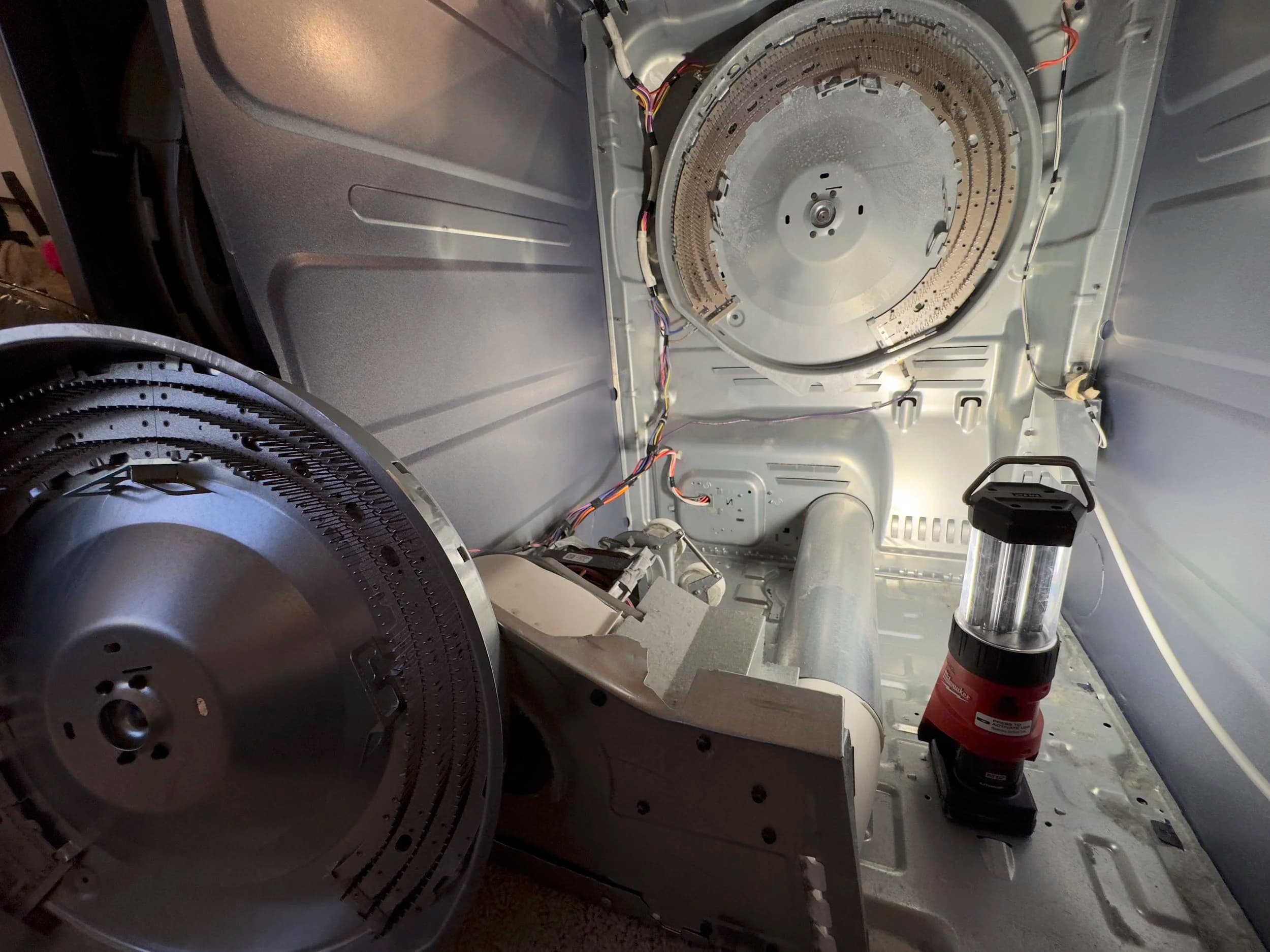
This image captures why I think repairable tech matters.
Last week my dryer went out. It would spin up, but no heat. This was the second time this had happened in the three years I’ve owned it. Annoying, but I pulled it out of the laundry room, and started tearing it apart. Looking for the culprit.
It didn’t take long to find it. A burnt wire at the bottom of the heating element. A few YouTube videos, $230 in parts, and a little shipping later I was stitching it back up. Considering this was the second instance in such a short time, I thought it wise to replace the entire heating element, attached thermistors, and a new pig tail connection for the burnt wire.
All in it saved me roughly $600, compared to a new dryer. Or $200-$300 in additional labor costs I would’ve paid a repair service.
This got me thinking about right-to-repair and how pervasive it is to our daily lives.
Perspective
I was able to make this repair because information was open, accessible, no proprietary tools involved, and parts were readily available. Typically, these concerns are left to conversations about consumer electronics with increasingly complex designs. However, the same concerns apply to the more pedestrian technology we encounter in a daily basis. The difference is perspective.
Meaning, consumer technology has problematic upgrade cycles and overwhelmingly complex repairs, which allows people to easily see a reasoning for right-to-repair. However, other problematic areas in key parts of our daily technology—such as, modern vehicles are getting more expensive and simultaneously needing specialized and expensive repair—doesn’t reach the same conclusion beyond cultural and societal complaints about cost.
The same problems apply to popular consumer tech just as daily conveniences:
- planned obsolescence via low(er) quality engineering
- anti-repair designs
- vendor lock-in
- software locks
- proprietary tools
The Problem
I recognize the irony of me writing this article on my MacBook Pro. Apple has famously (infamously?) designed their products around several of the key problematic practices I just highlighted. However,
These practices prevent timely repair, drive up costs, and degrade consumer confidence and satisfaction. For this simple example of my dryer, we can see:
- Repairing a dryer keeps my household costs down, ~$700
- A tune-up on my 18 year old vehicle prevented a $1000 repair bill, and let me manage this on my own schedule rather than being beholden to a mechanic shop.
Another example is a tune-up on my 18 year old vehicle prevented me from a ~$1000 repair bill, and that is for a relatively-speaking, mechanically simple vehicle. (2007 Toyota 4Runner)
According to ChatGPT, the cost of car repairs has significantly outpaced the pace of inflation
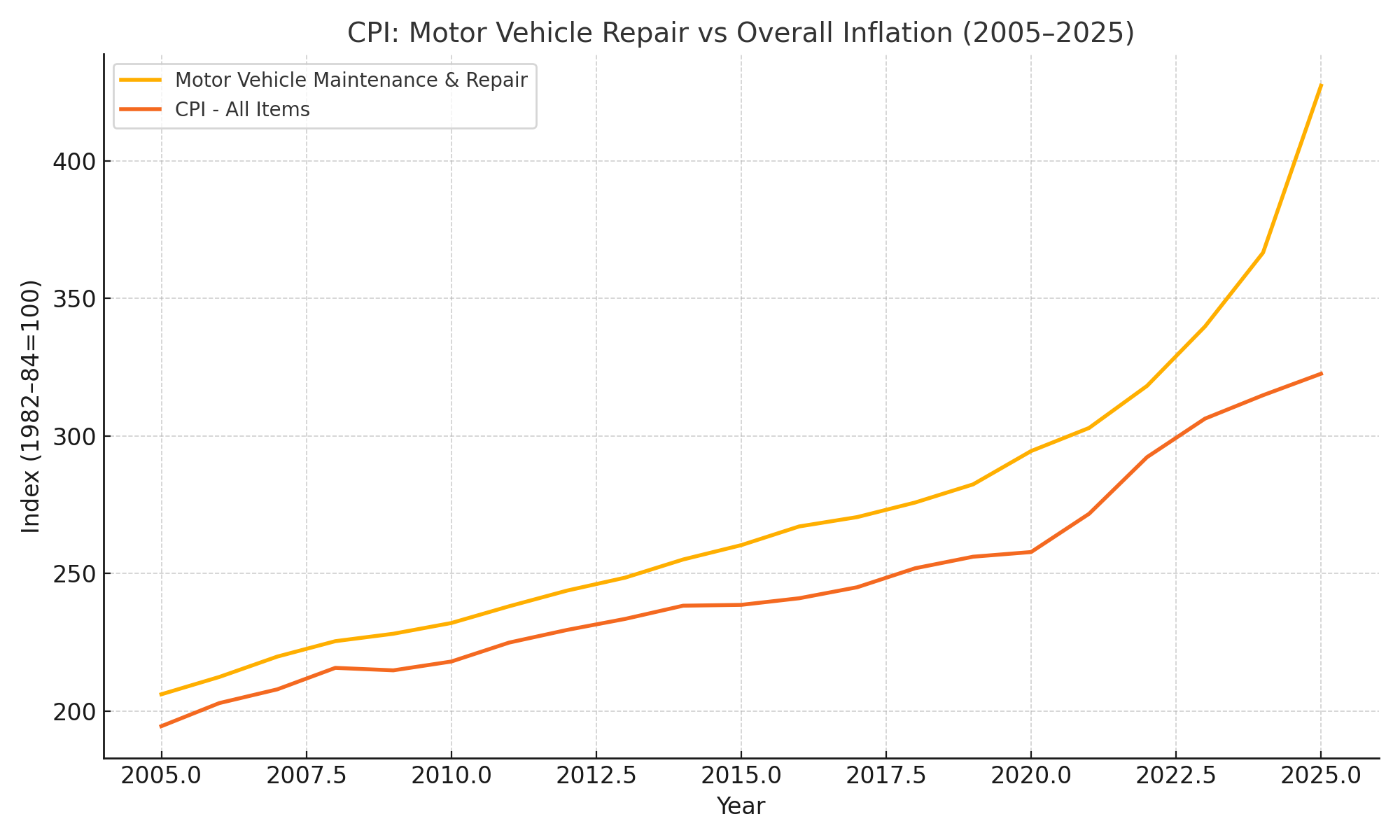
Auto repair costs vs inflation
What About It?
In the grand scheme, I don’t know. I don’t have an answer for this. It covers product design and marketing, cultural changes, people’s choices about convenience and total cost. But I can’t ignore the growing disgust I hear from people around me who bemoan how easily stuff seems to break and how expensive it feels to repair it.
So, where I can I’m going to commit to sharing info on repairing the things I own. And for the projects and software services I build on this site, I’m committing to make things as “accessible to repair” as I can.
We are better served when we remove artificial barriers.